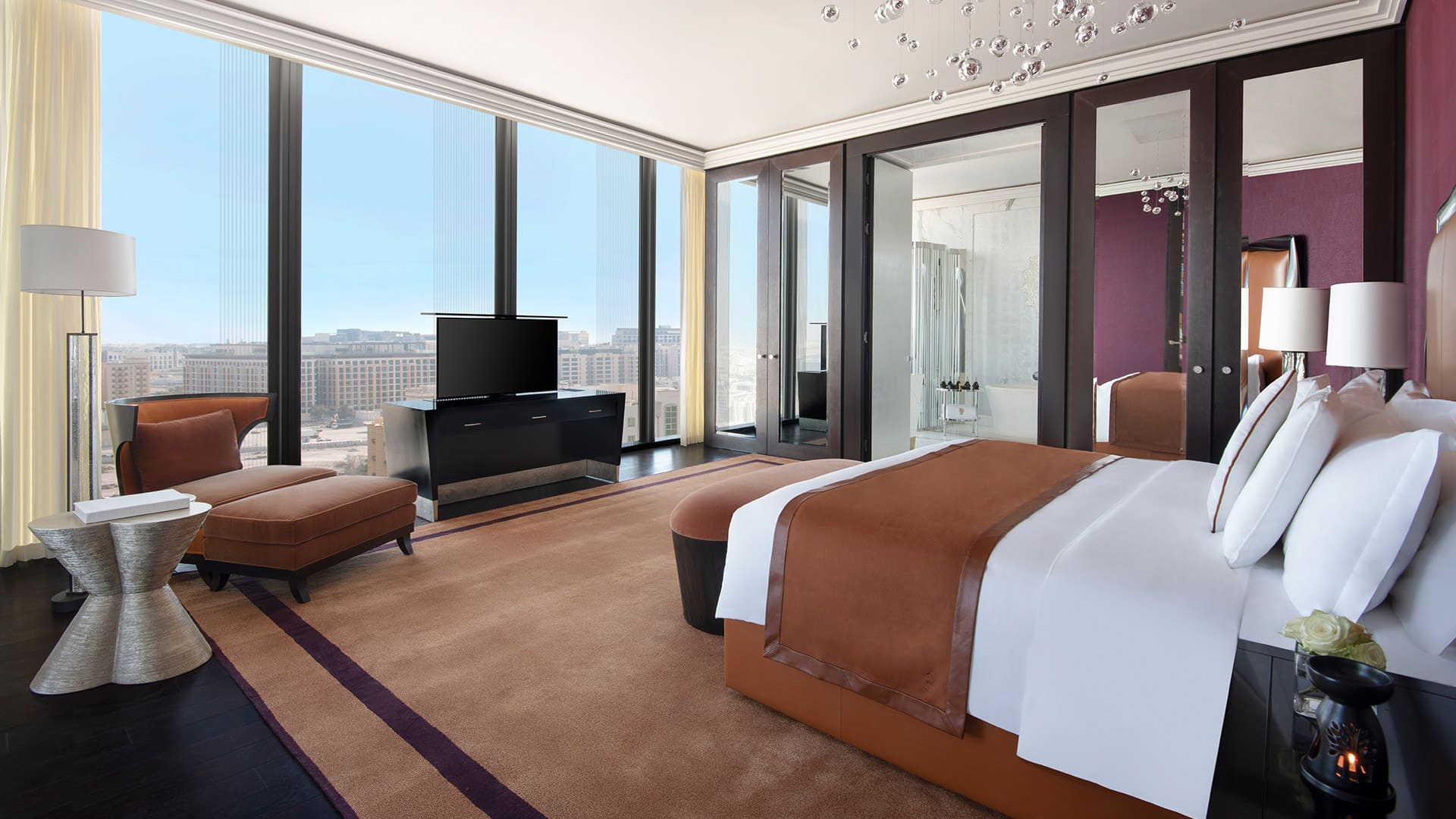
1. Start With the Purpose of the Stay
Choosing the right hotel in Qatar becomes much easier when the search begins with the purpose of the trip rather than with the hotel name itself. A property that is excellent for a short business visit may not be the most practical choice for a family holiday, while a large suite that feels ideal for an extended stay may be unnecessary for a traveler spending most of the day outside the hotel. The most effective hotel selection process therefore begins with a simple question: what should the accommodation make easier during the trip?
Business travelers usually value reliable connectivity, a practical workspace, efficient check-in, convenient transportation and a quiet sleeping environment. Families often place greater importance on room size, bedding arrangements, storage, bathroom practicality, pool facilities, nearby attractions and easy access to transportation. Leisure travelers may prioritize location, views, design, comfort and the ability to reach major areas without spending excessive time in transit.
For travelers comparing the wider market, reviewing Hotels & Resorts in Qatar can provide a useful starting point for organizing accommodation choices by destination and travel style. The goal is not simply to identify a hotel that looks attractive online. It is to identify a property whose location, room configuration and services align with the actual structure of the trip.
2. Evaluate Location as a Daily Travel Decision
Location is one of the most important elements in hotel selection because it affects almost every other part of the travel experience. A room may be beautifully designed, but if reaching the places you need to visit requires long transfers every day, the accommodation can become less convenient than expected. Location should therefore be evaluated according to daily movement rather than simply by looking at a map.
When comparing Hotels in Doha, consider the areas you expect to visit most frequently. A traveler attending meetings in a commercial district has different priorities from someone interested in museums, shopping, waterfront areas, cultural attractions or family-oriented activities. A central location may reduce transportation time, while a quieter district may provide a more relaxed environment.
Another important consideration is the relationship between the hotel and major roads, public transportation, airport access and important destinations. Even relatively short distances can feel different depending on traffic patterns, road accessibility and the time of day. A practical hotel comparison should therefore examine the complete route rather than relying on a simple distance measurement.
Location questions worth asking
- How close is the property to the main destinations on the itinerary?
- How easy is it to reach major roads?
- Is public transportation convenient?
- Will taxis or private transportation be readily available?
- Does the location reduce unnecessary daily travel?
- Is the surrounding environment suitable for the purpose of the stay?
3. Understand the Difference Between Room Type and Room Value
Hotel room categories can sometimes create confusion because the difference between two room types is not always immediately obvious. A larger room may provide more floor space, while a suite may offer a separate living area. A higher category may provide a better view, additional amenities, improved furnishings or a more convenient layout. The right choice depends on how the space will actually be used.
For short stays, a well-designed standard or deluxe room may offer excellent value. For longer stays, additional seating, storage, a separate living area or a larger bathroom can become considerably more useful. Travelers working from the room may also benefit from a proper desk and ergonomic seating rather than simply having a larger sleeping area.
Before selecting a category, examine the room layout rather than focusing only on the room name. Two rooms with similar sizes can feel very different depending on the position of the bed, desk, wardrobe, windows and seating. Practical design often has more impact on everyday comfort than decorative luxury.
4. Compare Accommodation by Traveler Profile
A professional hotel comparison should separate travelers into practical categories. This avoids the common mistake of evaluating every hotel using the same criteria. The ideal property for a solo traveler may not be the ideal property for parents with children, and the best option for a conference attendee may not be the most efficient choice for an extended stay.
For families spending time around the capital, the availability of suitable accommodation can be compared through Hotels in Al Wakrah as well. Looking beyond one district can reveal different accommodation styles and may help travelers find a better balance between room space, location and overall trip structure.
5. Build a Practical Hotel Specification Checklist
Instead of comparing hotels only through photographs and star classifications, create a consistent specification checklist. This makes the selection process more objective. The following table provides a professional framework that can be adapted to different travel needs.
| Category | What to Evaluate | Why It Matters |
|---|---|---|
| Room Size | Floor area, layout and usable space | Determines comfort, movement and storage |
| Bed Configuration | King, twin, sofa bed or additional sleeping options | Important for couples, families and groups |
| Workspace | Desk, chair, lighting and power access | Useful for business and remote work |
| Connectivity | Wi-Fi availability and practical reliability | Supports communication, work and entertainment |
| Bathroom | Shower, bathtub, storage and counter space | Affects everyday convenience |
| Storage | Wardrobe, drawers and luggage space | Especially valuable on longer stays |
| Facilities | Fitness, pool, lounge and family amenities | Can reduce the need to travel for basic leisure needs |
| Transportation | Parking, taxi access and nearby transport options | Influences daily mobility and time efficiency |
| Service | Reception, housekeeping and guest assistance | Shapes the overall quality of the stay |
| Location | Distance from major destinations | Determines daily travel efficiency |
6. Look Beyond the Photograph
Professional hotel selection requires more than attractive photography. Images are useful for understanding design, but they do not always communicate practical details such as storage capacity, room proportions, lighting quality, noise exposure, bathroom layout or the actual distance between functional areas.
When examining photographs, look for clues. Is there enough space around the bed? Does the desk appear practical? Is there a comfortable chair? Is the wardrobe large enough for the expected stay? Does the room have natural light? Is the bathroom designed for easy daily use? Does the seating area appear genuinely functional, or is it primarily decorative?
These details become especially important when selecting accommodation for several nights. A room that looks impressive in one photograph may not necessarily provide the most comfortable everyday experience. The strongest hotel choice is usually the one where visual appeal and practical design support each other.
7. Measure Total Travel Value Instead of Nightly Price Alone
Price remains an important part of hotel selection, but the nightly rate should not be viewed in isolation. The total value of accommodation can change considerably depending on transportation requirements, room size, included facilities, parking arrangements and the amount of time spent traveling to and from the property.
A hotel with a slightly higher room rate may provide stronger value if it reduces transportation requirements and places the traveler close to major destinations. Conversely, a lower room rate may not represent a genuine saving if the property creates additional daily travel expenses or inconvenience.
Travelers should therefore calculate the approximate total accommodation cost rather than focusing exclusively on the advertised room rate. This includes transportation, parking where applicable, meals when relevant, additional room requirements and the practical value of included services.
8. Consider Transportation Before Confirming the Hotel
Transportation can determine whether a hotel feels convenient or inconvenient. Travelers who plan to explore several areas should consider how they will move between the hotel and their daily destinations. This is especially important when the itinerary includes multiple stops.
For travelers who want independent mobility, arranging a Rent a car option can make it easier to structure the day around personal priorities. Car access may be particularly useful when the itinerary extends beyond a single central district or includes several destinations that are easier to reach by road.
Travelers who do not plan to drive should instead evaluate taxi availability, public transportation connections and the hotel's ability to assist with transfers. The objective is to select accommodation that supports the intended mobility pattern rather than forcing the traveler to change the itinerary around the hotel.
9. Prioritize Sleep Quality and the Quietness of the Room
Sleep quality is one of the most important but frequently overlooked hotel-selection criteria. A visually impressive room is not necessarily a restful room. Travelers should consider the potential impact of elevators, corridors, roads, common areas and other sources of activity.
Room orientation can sometimes influence the experience, particularly in large urban properties. Travelers who value quietness should consider requesting an appropriate room location when possible. Business travelers with early meetings and families with young children may benefit particularly from a calm sleeping environment.
Mattress quality, pillow selection, blackout curtains, temperature control and lighting also contribute to sleep comfort. These elements may seem minor individually, but together they can have a significant effect on how refreshed a traveler feels each morning.
10. Evaluate the Workspace for Business and Remote Work
The modern hotel room increasingly functions as both accommodation and temporary workspace. For travelers who need to answer messages, attend online meetings or complete professional tasks, the room should provide more than a small decorative table.
A practical workspace should have sufficient surface area, a comfortable chair, useful lighting and convenient access to electrical outlets. Internet connectivity is equally important. The best setup allows the traveler to work without converting the bed or another unsuitable area into a temporary office.
Noise control also matters. A room can have an excellent desk but still be unsuitable for video meetings if outside noise or corridor activity is excessive. Business travelers should therefore consider the room as a complete working environment.
11. Assess the Bathroom as a Daily-Use Space
Bathrooms strongly influence hotel comfort because they are used repeatedly throughout the stay. A professional evaluation should consider the shower design, water pressure, ventilation, counter space, storage and overall movement.
Travelers with longer stays may appreciate generous storage and separate areas for personal items. Families can benefit from bathrooms that allow more than one person to organize toiletries efficiently. Business travelers may value a fast and practical layout that makes morning routines easier.
Luxury is not simply about the materials used. Marble, decorative lighting and premium finishes can create an attractive appearance, but practical organization is equally important. A well-designed bathroom should combine visual quality with everyday functionality.
12. Think About Storage Before Packing
Storage becomes increasingly important as the length of the stay increases. A room that works perfectly for one overnight stay may feel crowded after several days if there is limited wardrobe space or nowhere to organize luggage.
Travelers should consider where clothing, shoes, bags, electronics and personal items will be placed. Suitcases that remain permanently open can reduce usable floor space and make an otherwise comfortable room feel smaller.
For longer stays, suites or residential-style rooms can sometimes provide a more practical environment because they separate sleeping, sitting and storage functions. This can make the accommodation feel less temporary and more organized.
13. Examine the Hotel's Common Facilities
Common facilities should be evaluated according to how likely they are to be used. A hotel may have an extensive list of facilities, but a traveler should focus on the services that genuinely improve the planned stay.
Facilities should therefore be scored based on relevance rather than quantity. Five highly useful facilities can represent better value than a long list of amenities that the traveler never uses.
14. Select the Right Hotel Category for the Itinerary
Hotel classification can provide a general indication of positioning, but it should not replace detailed comparison. Travelers should consider whether the category matches the experience they want and the services they require.
Premium properties may provide larger rooms, more extensive service and more refined common areas. Mid-range hotels can provide excellent value when the traveler prioritizes location and functional comfort. Serviced residences may be particularly attractive for extended stays because their design can emphasize residential convenience.
The important question is not whether a property appears prestigious. The better question is whether its category delivers the facilities and environment required by the traveler.
15. Compare Short Stays and Extended Stays Differently
A short stay is often dominated by location and convenience. When the traveler is in Qatar for only a limited period, time efficiency becomes highly valuable. A centrally positioned hotel can reduce the amount of time spent moving between destinations.
Extended stays require a different calculation. Room size, storage, laundry access, dining arrangements, workspace and residential-style layouts become more important. The traveler spends more time inside the accommodation, so small inconveniences accumulate.
For longer visits, the hotel should be evaluated almost like a temporary home. The ability to maintain a routine becomes a major component of value.
16. Use a Structured Booking Workflow
A disciplined booking process can prevent impulsive decisions. Start by defining the travel dates and purpose. Next, identify the main destinations and preferred areas. Then establish a realistic accommodation budget. After that, compare room categories and practical facilities.
Once the shortlist has been created, review location, transportation, room specifications and service expectations. Only after those elements have been considered should the traveler make the final Booking.
A structured process also makes it easier to compare several properties fairly. Instead of asking which hotel looks best, the traveler can ask which hotel achieves the strongest score across the criteria that actually matter.
17. Create a Personal Hotel Scorecard
One of the most effective professional techniques is to assign weights to the factors that matter most. For example, a business traveler could assign a high percentage to location, connectivity and workspace. A family could give greater weight to room size, facilities and transportation.
A simple scorecard might use a scale from one to ten for each category. The categories could include location, room comfort, bathroom quality, workspace, facilities, transportation, service, flexibility and overall value.
The score should not be treated as scientific. Its purpose is to make the decision transparent. It prevents one attractive photograph or one low price from dominating the entire evaluation.
18. Consider Check-In and Check-Out Efficiency
Arrival and departure are important parts of the hotel experience. Travelers arriving after a long journey generally benefit from an efficient check-in process, clear information and straightforward access to the room.
Business travelers may have particularly tight schedules, while families may appreciate a process that minimizes unnecessary waiting. When planning an itinerary, check-in and check-out times should be considered alongside transportation plans.
For early departures, transportation arrangements should be reviewed in advance. A smooth final morning can make a significant difference to the overall impression of the stay.
19. Examine Service Quality as a Practical Advantage
Service quality is difficult to reduce to a single number because it includes multiple interactions. Reception, housekeeping, maintenance response, guest assistance and communication all contribute to the experience.
Strong service should reduce friction. Guests should not have to repeatedly solve simple problems that the hotel can reasonably address. Clear communication and professional assistance can be particularly valuable when travelers have complex schedules.
The best service experience is often subtle. It allows the traveler to focus on the trip instead of spending unnecessary time managing accommodation-related issues.
20. Use Reviews as Evidence, Not as the Entire Decision
Guest reviews can provide useful insights into recurring patterns, but they should be interpreted carefully. Individual experiences can vary, and a single negative or positive comment does not necessarily describe the typical stay.
Look for repeated observations about room cleanliness, noise, service responsiveness, room size, location and maintenance. Patterns are generally more informative than isolated statements.
It is also useful to consider whether the review comes from a traveler with the same priorities. A solo business traveler and a family may evaluate the same property very differently because their expectations are not identical.
21. Plan Around the Daily Rhythm of the Trip
The most efficient hotel is often the one that fits the rhythm of the itinerary. If mornings are spent in meetings, the hotel should make morning departures simple. If evenings are spent exploring, the return journey should be manageable. If much of the day is spent at the hotel, room comfort and facilities deserve greater weight.
This approach changes hotel selection from a static comparison into a dynamic one. The question becomes: how will this property perform from morning until night?
22. Make the Most of Location Without Overpaying for It
Central locations can be valuable, but travelers should determine whether they actually need maximum centrality. Sometimes a property slightly outside the primary destination can offer a more spacious room, quieter environment or stronger facilities while remaining sufficiently convenient.
The best location is therefore not always the geographic center. It is the location that minimizes the combined cost of accommodation and transportation while supporting the itinerary.
This is particularly relevant for travelers with flexible schedules. A modest difference in travel time may be worthwhile if the hotel offers significantly better room quality or a more comfortable environment.
23. Think About Family Logistics
Family travel introduces several additional considerations. Room configuration becomes particularly important because sleeping arrangements need to work for everyone. Storage also becomes more valuable because families tend to carry more luggage and personal items.
Bathroom practicality, access to food, transportation and recreational facilities can also influence the overall experience. Parents should consider whether the hotel allows the family to maintain a manageable daily routine.
Another useful consideration is proximity. A hotel close to frequently visited attractions can reduce travel fatigue and make it easier to return to the room during the day when necessary.
24. Consider Accessibility and Practical Movement
Accessibility should be evaluated according to individual requirements. Travelers who need accessible rooms, elevators, adapted bathrooms or easier building navigation should confirm the exact features available before booking rather than assuming that a general accessibility statement covers every requirement.
Families traveling with strollers can also benefit from considering elevator access, room corridors and entrance design. Travelers with mobility limitations may need to assess the complete journey from the vehicle or entrance to the room.
Practical accessibility is ultimately about reducing unnecessary obstacles. The right accommodation should allow the traveler to move comfortably and independently according to personal needs.
25. Evaluate Technology and In-Room Convenience
Modern travelers increasingly depend on technology for communication, entertainment, work and trip organization. Hotel rooms should therefore be evaluated for practical technology rather than simply the presence of a television.
Useful features can include accessible power outlets, modern connectivity, smart television functionality, intuitive lighting controls and convenient bedside charging. Business travelers should also consider whether the technology supports productive work.
Technology is most valuable when it is simple. Complicated systems that require extensive instructions may create more inconvenience than benefit. Good hotel technology should make routine tasks easier rather than turning them into technical challenges.
26. Compare Design With Long-Term Comfort
Interior design can create an immediate impression, but comfort should remain the priority. Strong hotel design combines attractive materials with ergonomic furniture, useful lighting, logical room organization and durable finishes.
Neutral and balanced interiors can create a calming environment, while contemporary layouts can make rooms feel more spacious. However, style should never replace functionality. A beautiful chair that is uncomfortable to use does not provide meaningful value to a guest who needs a workspace.
Travelers should therefore evaluate design through the lens of actual use. Ask whether the room looks good and works well at the same time.
27. Understand the Importance of Lighting
Lighting affects both productivity and relaxation. A room should ideally provide different lighting levels for different activities, including reading, working, preparing for sleep and general movement.
Natural daylight is another valuable feature. Large windows can create a brighter environment and make a room feel more spacious. However, travelers who sleep during daylight hours should also consider blackout curtains or effective window treatments.
Lighting quality is especially relevant for business travelers who may work from the room and for leisure travelers who want a comfortable evening environment without leaving the property.
28. Review the Hotel Through the Lens of Time Efficiency
Time is one of the most valuable resources during travel. A hotel that saves twenty or thirty minutes on several daily journeys can provide substantial practical value over the course of a stay.
This is why transportation and location should be integrated into the hotel comparison rather than treated as separate subjects. A property that slightly reduces daily travel can create more time for meetings, sightseeing, rest and family activities.
For travelers building a busy itinerary, time efficiency can be more important than minor differences in room decoration.
29. Use Local Travel Resources to Improve Planning
Accommodation research works best when it is combined with destination planning. Travelers can explore accommodation choices first and then organize attractions, transportation and daily activities around the selected area.
Resources such as The Travel Journal can complement hotel research by helping travelers think about destination planning, travel ideas and practical organization before finalizing the itinerary.
The strongest planning process connects the hotel with the rest of the trip. Accommodation should not be an isolated purchase; it is one component of the complete travel system.
30. Compare Properties According to Real Usage
Every hotel feature should be evaluated according to its likely usage. A traveler who spends most of the day outside may need only a comfortable sleeping environment, while a traveler spending extended periods inside the property may require a more comprehensive set of facilities.
This approach prevents overbuying. Travelers sometimes pay significantly more for facilities they will rarely use. At the same time, others choose the lowest-cost option and later discover that the room lacks features essential to their comfort.
The optimal choice lies between those extremes: pay for the features that have meaningful value and avoid paying for features that do not support the itinerary.
31. Build a Balanced Qatar Accommodation Strategy
A strong accommodation strategy combines several layers of evaluation. The first layer is location. The second is room suitability. The third is facilities and services. The fourth is transportation. The fifth is total value.
Travelers can explore Hotels & Resorts in Qatar while keeping this framework in mind. Rather than choosing the first property that meets a basic requirement, compare several options against the same criteria.
For travelers focusing on the capital, Hotels in Doha can be reviewed according to neighborhood, room type and travel purpose. Those looking for alternatives outside the main urban core can also examine Hotels in Al Wakrah.
32. Avoid Common Hotel-Booking Mistakes
One common mistake is choosing a hotel entirely because of its appearance in photographs. Another is focusing exclusively on the lowest price. A third is selecting a room category without examining its layout.
Travelers can also make the mistake of ignoring transportation. A low room rate may appear attractive until daily travel requirements are added. Others underestimate the importance of storage, workspace or bathroom design when staying for several nights.
Another frequent issue is failing to compare the hotel with the actual itinerary. Accommodation should support the trip rather than become a source of additional logistical complexity.
Common mistakes to avoid
- Choosing based only on the headline price.
- Ignoring the actual daily travel routes.
- Assuming a larger room is automatically a better room.
- Overlooking workspace requirements.
- Ignoring storage on longer stays.
- Failing to verify transportation options.
- Comparing hotels using different criteria.
- Paying for facilities that will not be used.
33. A Professional Pre-Booking Review
Before confirming the final reservation, perform one last review. Confirm the selected room type, occupancy, expected sleeping arrangement, location, transportation plan and the facilities that matter most. Review the overall cost rather than only the headline rate.
It is also useful to revisit the original purpose of the trip. If the accommodation no longer appears to support the itinerary, return to the shortlist and compare alternatives. A few additional minutes of research can prevent several days of inconvenience.
For travelers who have already narrowed their options, a final Booking should be made only after the room and location have been checked against the actual travel plan.
34. A Practical Hotel Selection Matrix
The following matrix can help travelers make a final comparison quickly. Scores should be based on personal priorities rather than universal assumptions.
| Priority | Low Priority | Medium Priority | High Priority |
|---|---|---|---|
| Location | Flexible itinerary | Several planned destinations | Frequent meetings or fixed attractions |
| Room Size | Short solo stay | Several-night stay | Family or extended stay |
| Workspace | No work required | Occasional messages | Daily professional work |
| Facilities | Mostly outside hotel | Some leisure time | Significant hotel-based leisure |
| Transportation | Very limited movement | Moderate movement | Multiple daily destinations |
| Storage | Overnight stay | Short holiday | Longer stay or family travel |
35. Match the Room to the Length of the Day
A useful but often overlooked question is how much time will actually be spent inside the room. If the traveler leaves early and returns late every day, room size may be less important than location and sleep quality. If the traveler expects afternoons of rest, remote work or family time inside the hotel, the room itself becomes a much larger part of the experience.
This distinction can prevent unnecessary spending while also preventing under-selection. Travelers should pay for space when they will genuinely use it, especially on longer stays.
A well-matched room should feel comfortable during the hours it is actually occupied. This is a more useful standard than choosing a room simply because it belongs to a higher category.
36. Consider the Value of Separate Living Areas
Separate living areas can provide substantial value for families, professionals and extended-stay travelers. They create a physical distinction between sleeping, working and relaxing, which can make a longer stay feel more organized.
Suites with separate areas can also make it easier for one guest to work while another rests. Families may appreciate the additional flexibility when children follow different schedules.
However, the additional space should still be evaluated against the total cost. A suite is most valuable when the extra area will materially improve the experience.
37. Think About the Arrival Experience
The hotel experience begins before entering the room. Travelers should consider whether arrival is simple, whether transportation access is practical and whether the property feels easy to navigate.
For travelers arriving with luggage or traveling with family, practical access can make the first hour considerably easier. Clear reception procedures and convenient room access reduce unnecessary friction after a journey.
The arrival experience may seem temporary, but it establishes the first impression of the property and can influence how comfortable the traveler feels during the remainder of the stay.
38. Plan the Departure Before the First Night
A smart accommodation strategy considers departure from the beginning. Travelers with early flights or fixed appointments should assess transportation requirements and allow sufficient time for check-out and travel.
Parking arrangements, vehicle access and the distance to the departure point should be part of the overall calculation. A hotel that is excellent for arrival may not necessarily be the most convenient choice for departure if the final schedule is demanding.
This is another reason why accommodation should be evaluated as part of the complete itinerary rather than as an isolated room purchase.
39. Use a Repeatable Method for Future Trips
Once a traveler develops a successful hotel-selection framework, the same process can be reused for future trips. Start with the purpose of travel, define the main destinations, identify the desired room characteristics, compare transportation and calculate total value.
This repeatable method makes hotel research faster and more consistent. Instead of beginning from zero every time, travelers can maintain a personal checklist and adjust the weighting according to the new itinerary.
The method also makes it easier to compare different accommodation markets because the underlying criteria remain consistent.
40. Final Practical Checklist for Qatar Hotel Selection
Before selecting accommodation, review the following checklist carefully:
41. How to Turn Hotel Research Into a Better Travel Experience
The strongest hotel strategy is ultimately about reducing friction. When the room fits the traveler, the location fits the itinerary, transportation is practical and the facilities support daily needs, the accommodation becomes a positive part of the journey rather than simply a place to sleep.
Travelers should resist the temptation to judge properties through one dimension. A beautiful room cannot compensate for an unsuitable location for a demanding business itinerary. A low rate cannot automatically compensate for uncomfortable accommodation. A large facility list does not guarantee meaningful value.
The professional approach is to compare the complete experience. Review the room, location, services, transportation, facilities and total cost together. Then select the property that best matches the way the trip will actually unfold.
42. A Smarter Way to Compare Qatar Accommodation
Qatar offers a broad range of accommodation styles, from practical urban rooms to spacious suites and residential-style options. That variety makes structured comparison especially valuable. Travelers can begin with the destination area, narrow the options according to their travel purpose and then evaluate the room itself.
Those comparing different areas can return to Hotels & Resorts in Qatar and use the destination structure to organize the search. Travelers whose plans are centered on the capital can compare Hotels in Doha, while those considering a different environment can review Hotels in Al Wakrah.
For mobility-focused itineraries, combining accommodation planning with a Rent a car solution can also make the overall travel structure more flexible. The objective is to create one connected plan in which the hotel, transportation and itinerary support each other.
43. The Role of Flexibility in Hotel Selection
Flexibility can be valuable when travel plans may change. Travelers should understand the booking conditions attached to the selected accommodation and consider how much flexibility is appropriate for the trip.
A slightly different rate may be worthwhile if it provides useful flexibility, especially for business travelers whose schedules can change. At the same time, travelers with fixed plans may prefer to optimize for overall value when flexibility is less important.
The correct choice depends on the level of uncertainty. The more likely the itinerary is to change, the more useful flexible accommodation arrangements can become.
44. Build the Accommodation Around the Traveler, Not the Other Way Around
The central principle of professional hotel selection is simple: accommodation should support the traveler. The hotel should make the itinerary easier, the room should make rest comfortable and the available services should reduce unnecessary effort.
When evaluating a property, imagine the practical sequence of the stay. Wake up, prepare, work or explore, travel, return, relax and sleep. If the hotel supports those activities naturally, it is likely to be a strong match.
If the traveler must repeatedly compromise because of the hotel's location, room layout or facilities, the apparent savings or visual appeal may not justify the choice.
45. Frequently Asked Questions About Choosing Hotels in Qatar
Location is usually one of the most influential factors because it affects transportation time, access to destinations and the overall structure of the trip. However, the correct priority depends on the traveler's purpose.
Business travelers should prioritize location, reliable connectivity, a comfortable workspace, quiet sleeping conditions, efficient check-in and convenient transportation.
Families should examine room size, bedding configuration, storage, bathroom practicality, recreational facilities and access to transportation and family-oriented destinations.
No. A larger room is valuable when the additional space improves comfort, work, storage or family organization. A well-designed smaller room can sometimes provide better practical value.
Price is important, but it should be evaluated alongside transportation, room quality, facilities, location and the total cost of the trip.
Create a scorecard covering location, room comfort, facilities, transportation, service and total value. Give each category a weight based on the purpose of the trip.
Yes. Transportation can influence both cost and time. A convenient hotel location can reduce daily travel and make the itinerary more efficient.
Extended-stay travelers generally benefit from larger rooms, practical storage, workspace, convenient dining arrangements, laundry options and a location that supports everyday routines.
Yes. Comparing neighborhoods can reveal meaningful differences in transportation, atmosphere, room value and access to the destinations included in the itinerary.
Choose the property that provides the strongest overall match between the travel purpose, room requirements, location, facilities, transportation needs and total value rather than selecting based on one feature alone.
46. The Professional Standard for a High-Value Hotel Stay
A high-value hotel stay is not defined by one luxury feature. It is defined by consistency. The room should be comfortable, the location should be practical, the services should be useful, transportation should be manageable and the total cost should make sense for the traveler's objectives.
For travelers researching Qatar, the most effective approach is to compare accommodation systematically and avoid decisions based solely on photographs, promotional language or headline pricing. A thoughtful hotel selection can save time, reduce unnecessary travel and improve the quality of every day spent at the destination.
Once the accommodation has been selected, travelers can continue refining the itinerary through reliable planning resources such as The Travel Journal. The same structured thinking used to select the hotel can then be applied to transportation, activities and daily scheduling.
The final goal is straightforward: select accommodation that fits the trip so naturally that the hotel becomes an enabler of the experience. When location, room design, facilities, service and mobility work together, the traveler gains something more valuable than a room—the ability to enjoy the destination with fewer unnecessary decisions and less logistical friction.


No comments:
Post a Comment